


The spiritual landscape among Gen Z is changing, and not in the ways many expected. While previous generations saw women leading the way in church attendance and faith practices, our new research in partnership with Barna reveals a surprising reversal: young men are increasingly returning to faith and church, while young women are leaving in greater numbers.
The Data: A Gender Divide in Faith
Recent findings from the Gen Z Volume 3 report show that female young adults (ages 18–24) are now the least likely among their peers to identify with a faith or be active in church involvement. In fact, they are also more likely to say they don’t believe in God or a higher power. This marks a significant shift from previous generations, where women were often the backbone of church attendance.
“Barna data shows that women have led the way in spiritual disciplines like church attendance in the past. This could indicate a broader shift of women out of the Church and a less devout emerging generation of women.”
— Gen Z Volume 3, p. 85
Key Stats:
- 38% of female Gen Z young adults (18–24) identify with no faith, compared to 32% of male Gen Z young adults and 22% of male Gen Z teens.


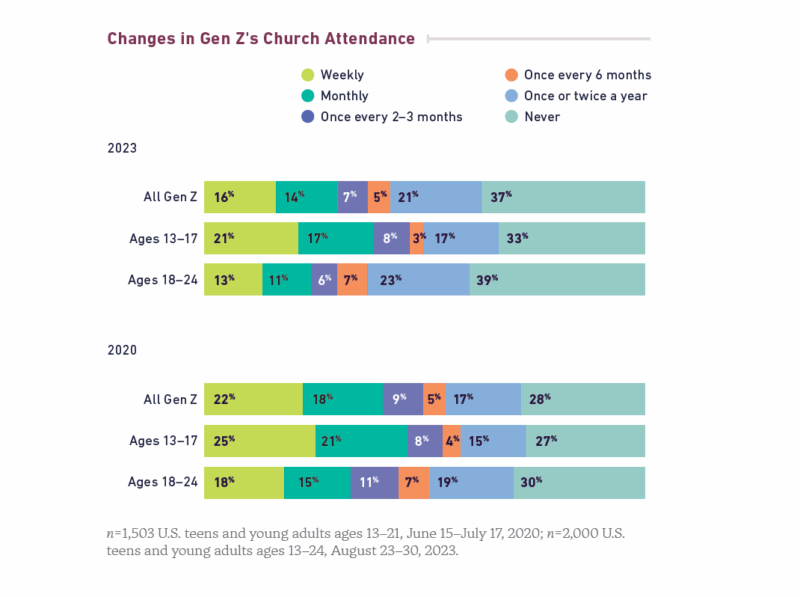
- Weekly church attendance among Gen Z has dropped from 22% in 2020 to 16% in 2023, with the decline driven primarily by young adults exiting the church.

- Female young adults are significantly more likely than female teens to strongly agree that morals change over time based on society (27% vs. 18%), suggesting a move away from traditional religious frameworks.
Why Are Young Men Returning?
While overall church attendance is down, young men in Gen Z are showing signs of renewed interest in faith and church involvement. The report notes that young men are more likely than their female peers to:
- Claim a personal commitment to Jesus Christ (51% of young adult males vs. 44% of young adult females).
- Hold a traditional view of God as the all-powerful creator.
- See themselves as self-guided in their faith journey, seeking answers and meaning independently.
This trend may be linked to broader cultural shifts, including the search for purpose, stability, and identity in a rapidly changing world. Gen Z males are also more likely to report that their religious beliefs are very important to their sense of self, and to trust themselves as sources for spiritual questions.
What’s Driving the Decline Among Females?
The report suggests several factors:
- Increased pressure and anxiety: Female Gen Z young adults report higher levels of internal and external pressure, anxiety, and feelings of being “held back” from authentic self-expression.
- Changing views on morality and faith: Young women are more likely to embrace moral relativism and question traditional religious teachings.
- A need for connection and community: The report highlights that female young adults have deep needs for connection, community, and support—needs that may not be met by traditional church structures.


The Opportunity for Churches
This gap presents both a challenge and an opportunity. Churches must rethink how they engage and support young women, addressing their unique needs for authenticity, connection, and mental health support. At the same time, the renewed interest among young men offers hope for revitalizing faith communities—if leaders can design environments that are welcoming, relevant, and rooted in real relationships.
“The Church needs to think outside the box to reengage—or, if needed, reconcile with—this group who have deep needs for connection, community and support.”
— Gen Z Volume 3, p. 85
Sources:
Gen Z Volume 3, Barna Group & Impact 360 Institute, 2024.